Swissair Headquarters Addition
Preliminary
Gabriel Barolette & Wendi Abdool
Architectural Design IV

Project: Affordable Living Space for the Next Generation of Workers
Project Overview:
Long Island is experiencing a growing workforce shortage directly tied to the region's lack of affordable housing. Young, highly educated professionals entering the job market often begin with modest salaries and significant student debt. For many, the cost of living on Long Island is prohibitive, forcing them either to relocate elsewhere or for local businesses to consider alternative solutions. One such solution is the development of corporate-sponsored incubator housing- affordable living arrangements that help workers establish themselves during the early stages of their careers.
Background Research
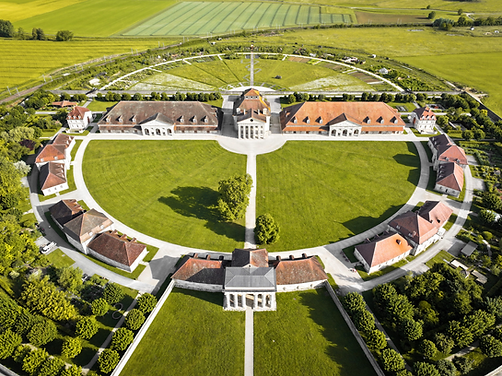
Royal Saltworks at Arc-et-Senans:
-
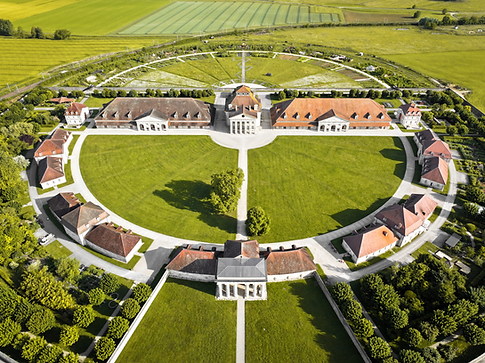
It is located in the Jura region of eastern France. Designed by Claude-Nicolas Ledoux and was built between 1775 and1779. The site was a major salt production facility during the 18th century and is now a UNESCO World Heritage site.
-
The complex has a radial, semi-circular layout, designed for efficiency and social order, reflecting Enlightenment ideals of rationalism and harmony between people and industry.
-
Comprised of various buildings, including worker housing, administrative offices, boiling houses, and storage facilities, it was designed to be a self-sustained community.
-
Communal spaces such as gardens, event areas, or business hubs could be spread across the site to foster interaction between all types of residents.
-
The development could serve as an innovative, flexible community where business professionals, entrepreneurs, and creatives come together to live, work, and collaborate.
Royal Saltworks at Arc-et-Senans' Significance:
-
The Saltworks is an early example of industrial architecture with a strong emphasis on aesthetic design. Ledoux’s work reflects the period's utopian thinking about social and architectural harmony.
-
It was one of the first industrial complexes to integrate rational, planned layouts that reflected idealized social order, providing workers with functional and aesthetically pleasing spaces.
-
The design combined both industrial efficiency and social care for workers. Ledoux envisioned a harmonious relationship between the workers, their work environment, and their living conditions, which was progressive for its time.
-
As one of the largest and most modern saltworks of its time, it played a critical role in the economic development of the region. Salt was a crucial commodity for food preservation, and the site contributed to France’s economy for over a century.
-
The Royal Saltworks at Arc-et-Senans is an important industrial and architectural landmark. It represents Claude-Nicolas Ledoux’s vision of blending Enlightenment ideals with industrial needs, while also showcasing the cultural and economic significance of salt production in France during the 18th century. Its innovative design and social philosophies make it an iconic example of industrial architecture and a key site in the history of European architecture.


Ford Village Industries

-
The Ford Village Industries was an initiative launched by Henry Ford in the early20th century, aiming to reshape how workers related to their jobs, communities, and overall quality of life. Ford envisioned a system where industrial production and social welfare were closely linked, bringing benefits not only to employees but also to the Ford Motor Company itself.
-
This vision took form in several industrial towns across Michigan, most prominently in Dearborn, the company’s headquarters, as well as in nearby communities.
-
One of the most significant examples was the town of Ford son, established in1919. Built to support workers at the Ford son Tractor Plant, the town embodied Ford’s idea of a “model community.” It offered affordable housing, modern infrastructure, and clean, organized neighborhoods.
-
Beyond housing, Ford son was designed with a strong emphasis on education, health, and recreation, ensuring workers and their families could enjoy a well-rounded lifestyle.
Ford Village Industries'Significance
-
Ford Village Industries were significant in shaping the culture of industrial America. Ford’s ideal of creating self-sufficient, orderly communities reflected the progressive social thinking of the time but was also a form of social engineering that tried to shape workers' behaviors and values.
-
Though criticized for being controlling, Ford’s villages aimed to improve workers’ lives while enhancing productivity. They were part of his vertical integration strategy, extending company control to employees' living conditions.
-
By managing both work and home life, Ford created communities designed to maximize worker efficiency. These villages offered housing, education, healthcare, and recreation, reducing reliance on outside systems.
-
Ford’s village industries were early examples of corporate social engineering. He enforced strict moral standards and regulated workers’ social and leisure activities.
-
His goal was to build a disciplined, loyal, and productive workforce by blending industrial efficiency with social order. However, this raised concerns about excessive corporate control over workers' lives.
-
In Michigan, especially Dearborn, Ford’s projects turned small towns into industrial hubs. His efforts played a key role in making the region a global center for automobile manufacturing.
-
Ford’s vision reflected progressive-era thinking that industry could improve society. Yet, many criticized his approach as overly paternalistic and invasive.


Site Analysis & Sun Angles

-
The building has access from Pinelawn Road, which is located at the left of the plan.
-
The building is oriented so that its main entrances facing roughly North, with the office building itself located centrally on the plot. There is a parking lot to the south and west of the building

Summer

Fall

Winter

Spring
-
During the summertime, the southern facade of the building will receive lots of sunlight, especially in the afternoon when the sun is to the south.
-
During the wintertime, the sun is lower in the sky, so the southern side of the building will again receive sunlight, though it will be at a lower angle. The eastern facade will see sunlight earlier in the day as the sunrises from the southeast.
-
During the fall and spring, the sun will be roughly overhead at noon, with sunlight distributed across the southern facade and parts of the eastern and western facades. Both sides will receive moderate sunlight during the middle of the day.
Zoning Analysis:
-
Address: 41 Pinelawn Road Melville, New York 11747
-
Section: 255
-
Acres: 5
-
Zone: C2
-
Lot: 017
-
Section: 255
-
Block: 01
-
Minimum front yard 75ft , rear yard 75ft
-
Number of Yards: 2
-
Minimum Side Yards: Interior lots 40ft wide; combined width of two yards80ft.Corner lots 75ft on street side; width of interior side yard 40ft
-
Minimum Lot Area: Gross Area 3 acres
-
Maximum Percent of Lot covered by Building: 25%
-
Use: Office and Research Building
-
Maximum Height: 2 Stories, 30ft

Building Analysis:


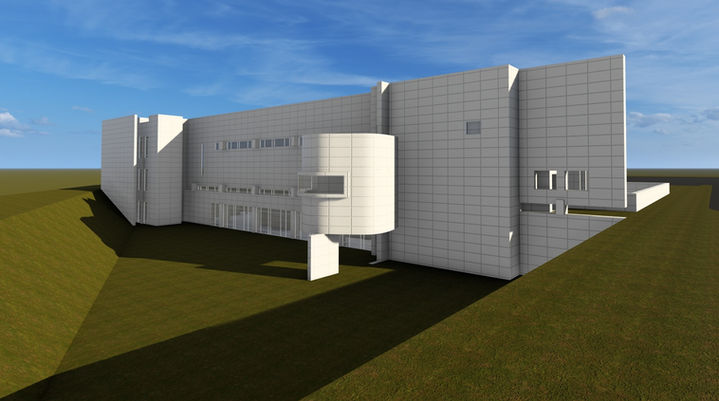
3D Render of the Swiss Air Building:

North Elevation

East Elevation


South Elevation
West Elevation

Perceptive View 1
Perceptive View 2
On site Photos


Preliminary Design l:
Main Idea: Sustainable Building with Sun Angle
Heuristic: Environmental Relations, & Typology
For the first design, we decided to use the heuristic environmental and typology analogy, While also incorporating pieces of Meier's building to make a connection with the proposed building. We drew inspiration from the Royal Saltworks at Royal Saltworks at Arc-et-Senans as a structural and spatial reference.
Building Analysis:

Preliminary l Floor Plans:


Basement Floor Plan
First Floor Plan

Studio #1
Studio #2
Studio #3
Studio #4
Studio #5
Studio #6
Studio #7
Duplex #1
Duplex #2
Second Floor Plan
Studio #8
Studio #9
Studio #10
Studio #11
Studio #12
Studio #13
Studio #14
Duplex #1
Duplex #2
Third Floor Plan

Roof Plan
Preliminary Design l Renders:

North Elevation

West Elevation


East Elevation
North West Axonometric

North East Axonometric

South West Axonometric

Rooftop Rain Garden View

Birdseye View
Preliminary Design l 360 Render:

360 Render #1

360 Render #2
Preliminary Design ll:
Main Idea: Metaphor of Swiss Air Business
Heuristic: Literal Analogy (Iconic - Metaphor)
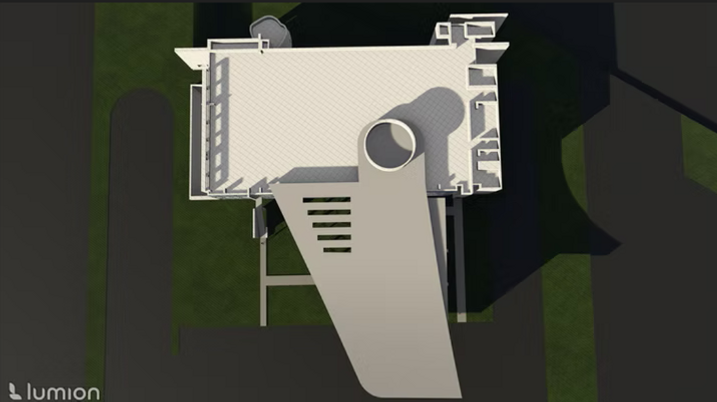
For the second design, we used the heuristic literal analogy, metaphor of an airplane wing to express lightness and movement, while incorporating elements of Meier’s style to connect with the proposed building.

Building Analysis:

Preliminary Floor Plan:
Basement Floor Plan

First Floor Plan

Second Floor Plan
Third Floor Plan
Studio #1
Studio #2
Studio #3
Studio #4
Studio #5
Duplex #1
Duplex #2
Studio #6
Studio #7
Studio #8
Studio #9
Duplex #1
Duplex #2
Studio #10
Studio #11
Studio #12
Studio #13
Studio #14

Roof Plan
Preliminary Design ll Renders:

North Elevation

West Elevation

East Elevation

North East Axonometric

South West Axonometric

South East Axonometric

Perceptive View #1

Perceptive View #2

3D Render View
Birds Eye View
Preliminary Design ll 360 Render:

360 Render #1

360 Render #2
Preliminary Design lll:
Main Idea: Richard Meier's Collage
Heuristic: Formal Language
For the third design, we aimed to use the heuristic formal language while incorporating elements from Richard Meier’s other works. The concept combines multiple design features to create a collage-like composition inspired by Meier’s aesthetic.


Building Analysis:

Preliminary Design lll Renders:

North Elevation

West Elevation

East Elevation

South West Elevation

North East Elevation

North West Elevation
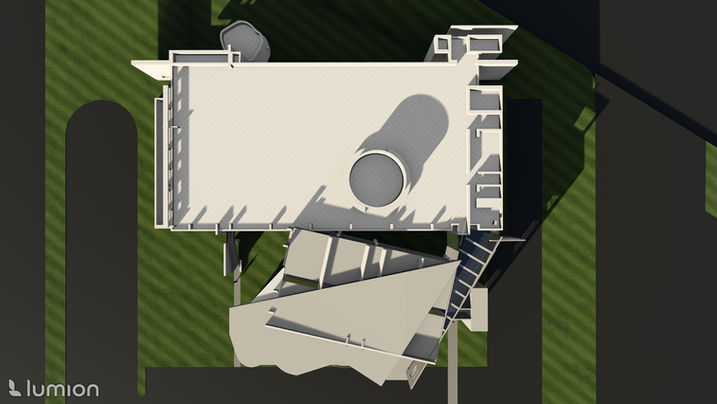
Birdseye View

Perspective View #1

Perspective View #2


Perspective View #3
Perspective View #4
Preliminary Design lll 360 Render:
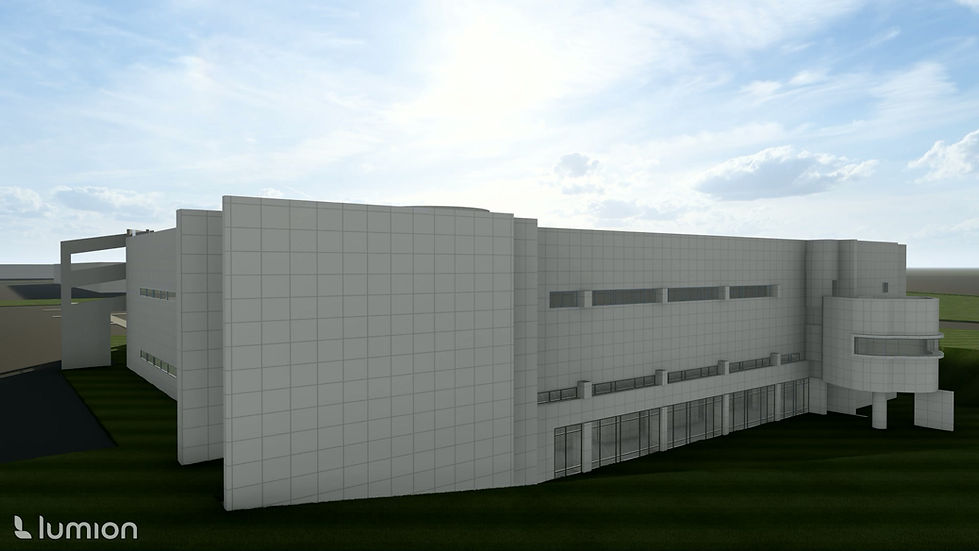
360 Render #1
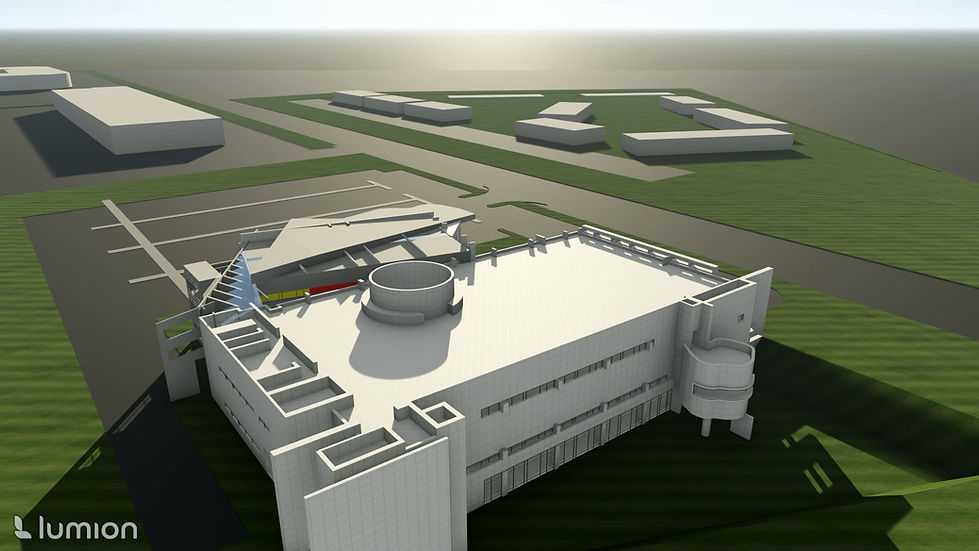
360 Render #2